
El Salvador birth records online help people locate family papers from home computers. These digital files let researchers search through names and dates from the year 1704 up to 1977. The database uses files from the FamilySearch civil registration collection. You can look through departments first. Then you pick the city or the town. Last, you choose the type of record you need. These include births, marriages, and deaths. The catalog has more than 200,000 digital pictures. Many of these pictures link to other references. You can see a small camera icon next to a name. Clicking that icon shows a clear scan of the old paper record. This lets you see the actual handwriting from long ago.

Search FamilySearch Civil Registration Records
El Salvador birth records online are easy to search on the FamilySearch website. You start by picking a department from a list. El Salvador has 14 departments. After you pick one, you choose the exact town or city. This is the place where the birth or wedding happened. You then pick the type of record and the years. The collection spans from 1704 to 1977. There are over 200,000 pictures in this part of the site. If you see a camera icon, click it. You will see a high-quality scan of the original page. This is helpful for reading old names and dates clearly.
The site has many tools for people looking for their roots. You can search for a specific name to see if it is in the index. The index has over 120,000 births. It also has 80,000 marriage records. There are nearly 100,000 death papers too. You can also look at census lists from 1890, 1910, and 1930. These lists show where people lived and who was in their house. This helps you build a family tree and see how your family moved over time.
Using Online Genealogy Databases
El Salvador birth records online are found in several big databases. These sites have links to primary papers. These papers include birth certificates and marriage licenses. You can also look for death notices and cemetery notes. Some sites have national census data and immigration lists. Land papers and military lists are also there. Newspaper archives and probate files help fill in the gaps. Some of these websites need a paid account. Many others let you search for free. You should check the years covered on each site. Each one covers different years and places.
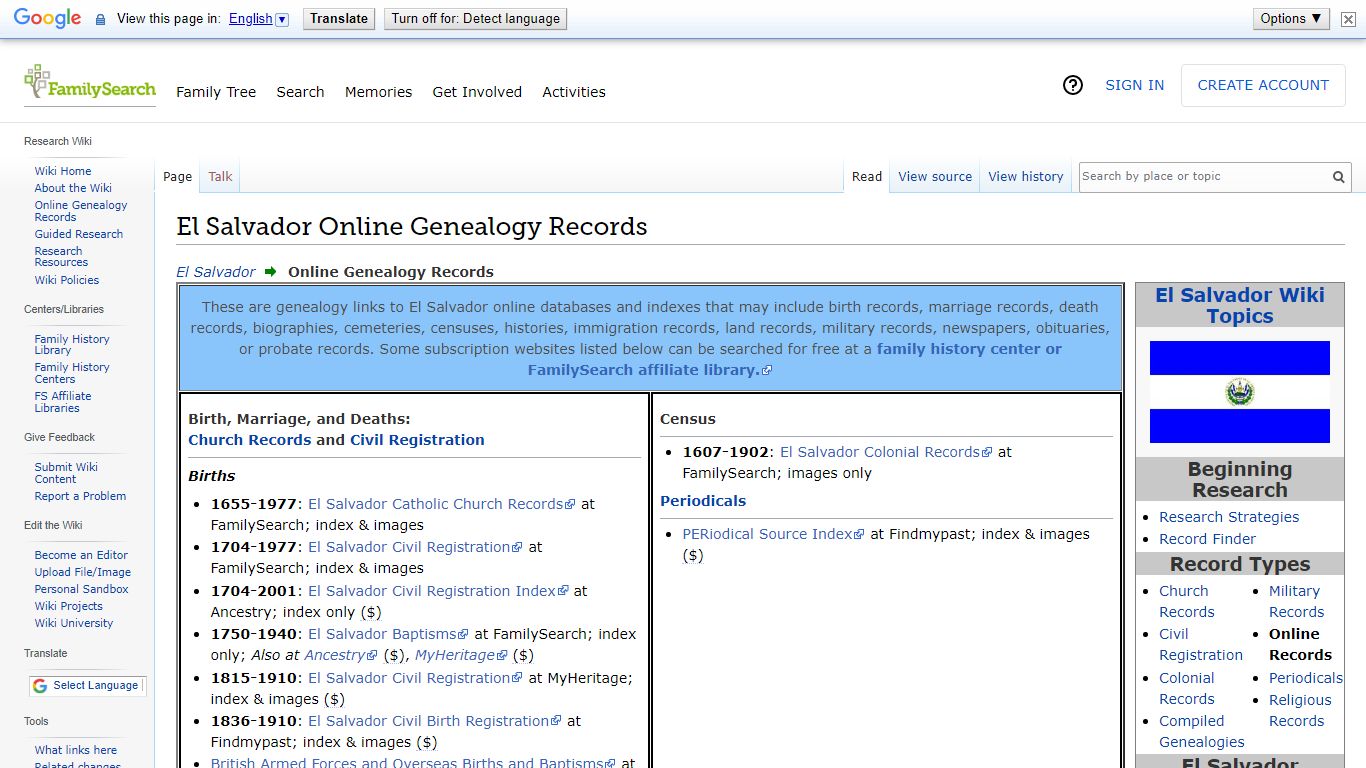
The geographic scope of these records is very wide. You can find files from small villages and big cities alike. Targeting the exact document you need is faster when you know the town. Use the free indexes first. These indexes point you to the right digital pictures. This saves time and makes your search better. People use these records for legal needs and family history. They are a great way to link the past to the present.
https://www.familysearch.org/wiki/en/El_Salvador_Online_Genealogy_Records
Inherit Estate Service for Official Certificates
El Salvador birth records online are useful for starting a search, but sometimes you need an official copy. Inherit Estate is a top provider for these papers in Latin America. They handle over 15,000 requests every year. They help people get birth, marriage, and death certificates. They also work with divorce papers. You send them a scan of your ID card. They then talk to the local civil registry in El Salvador. They get the certified copy for you. They can also get the paper notarized. They send it to you by digital file or safe mail.
This service includes moving the text into English or Portuguese. This is important for legal needs in other countries. They follow local rules for probate and land inheritance. This makes sure the papers work for court cases. Using a service like this is helpful if you do not live in El Salvador. It saves you from traveling to the local town office. The firm makes sure everything is done correctly and safely.
https://inheritestate.com/el-salvador-birth-marriage-death-certificates/
Free Records and Census Lists
El Salvador birth records online include free lists at FamilySearch. These lists cover more than 120,000 births from the early 1800s. There are also 80,000 marriage notes and 100,000 death certificates. You can find census lists from the years 1890, 1910, and 1930. These lists are digital and easy to read. They also have probate lists and land grant papers. Military service lists are also part of the collection. New records are added every few months. Each entry has a link to the searchable data. It also tells you the years the records cover.
Looking at census data is a smart move. It shows you who lived with your ancestors. You can see their ages and where they were born. This helps you confirm you have the right person. Land records show what property your family owned. Military records might tell you about their service and health. These free tools are perfect for people starting a family tree. They give you a lot of details without costing any money.
https://www.ongenealogy.com/listings/el-salvador-genealogy-records-online-at-familysearch/
Municipal Civil Registry File Series
The GN 00312.126 file series lists civil registry work for towns in El Salvador. Each part shows the town name and the department. It lists the type of event like a birth or a wedding. It also gives the date the paper was made. This series has over 250,000 entries. They cover the late 1800s to the early 2000s. These digital files are kept in the National Archives of El Salvador. You can reach them through a secure portal. This is a very reliable source for modern records.
Municipal records are the heart of the registry system. In El Salvador, each town keeps its own books. This file series brings those books together in one place. It is useful for verifying dates for legal reasons. It also helps you find which town to contact for a certified copy. The range of years is very helpful for current needs. People looking for citizenship often use these files to find their parents’ papers.
https://secure.ssa.gov/poms.nsf/lnx/0200312126
MyHeritage Vital Record Datasets
MyHeritage has three big sets of El Salvador birth records online. The first set is baptismal records from 1750 to 1940. It has 533,665 names. The second set is civil registration from 1815 to 1910. The third set is marriage records from 1810 to 1930. These have over 111,000 entries. Each record has the person’s full name. It often lists parents’ names and spouse names. You can search by year or by town. The site shows high-quality images of the handwritten pages. This helps you see every detail.
The baptismal records are great for very old family history. Since civil registration started later, church books are the best source for the 1700s. You can see the name of the priest and the church. This helps you find where your family worshipped. Civil registration files show more legal details. They often have the names of witnesses. This can help you find other family members like uncles or cousins. Using all three sets gives you a full picture of your family history.
https://www.myheritage.com/research/category-El-Salvador/el-salvador-genealogy-vital-records
U.S. Embassy Consular Report of Birth Abroad
U.S. citizens with children born in El Salvador need specific papers. They can apply for a Consular Report of Birth Abroad (CRBA). This paper proves the child is a U.S. citizen. At least one parent must have been a U.S. citizen when the child was born. That parent must also meet physical presence rules. You must show the child’s local birth certificate and the parent’s U.S. papers. You also need a filled-out DS-2029 form. You take these to the U.S. Embassy in San Salvador. This is a very important step for travel and legal status.
The process requires an appointment at the embassy. You should bring all original papers with you. They will check the foreign birth certificate carefully. They also check the evidence of the parent’s residency in the U.S. Once approved, the CRBA serves just like a birth certificate for most needs. It helps the child get a U.S. passport. This paper is essential for families moving between countries. It ensures the child’s rights as a citizen are protected.
https://sv.usembassy.gov/u-s-citizen-services/child-family-matters/birth/
Civil Registration Index 1704 to 2001
The El Salvador birth records online index from FamilySearch is a massive tool. It was put together in 2013 and has 1.2 million names. It covers births, marriages, and deaths from 1704 to 2001. You can search by name, date, or town. It gives you a record number for each entry. You can then look at a digital picture of the actual microfilm page. This helps you find the original paper. You can also link these names to church or probate records. This makes your search much stronger.
This index is useful because it covers such a long time. You can trace several generations in one place. It brings together files from the National Archives. This means you do not have to search each town separately. Having the record number makes it easy to ask for an official copy later. It is one of the best places to start any search. Many people find their grandparents and great-grandparents here in just a few minutes.
https://www.ancestry.com/search/collections/9838/
Common Questions on Salvadoran Records
Each town in El Salvador has its own office for records. There is no one computer list for the whole country. Most town offices are only open for a few hours. They usually do not have a way to mail papers to you. You must go there in person and show your ID. The U.S. Embassy suggests hiring a local lawyer to help. You can also ask a friend or family member who lives there. They can go to the office and get the certified copy for you. Then they can mail it to you safely.
For hard cases, check the embassy website. They have a list of what you need to do. They list the contact details for many town offices. They also tell you how long it might take to get your papers. It is a good idea to write down every person you talk to. Always check if a service is real before you pay them. This keeps your money and your identity safe. Getting records can take time, so start as soon as you can.
Ancestry Genealogy Research Hub
Ancestry has a special hub for El Salvador birth records online. It pulls together index files and digital papers. You can see historical stories about the country too. The hub has town registry extracts and church baptism books. It also has lists of people who moved to the United States. Land grant papers from the 1800s are also there. The site has over 250,000 family trees from other users. You can look at these trees to see if you are related. This lets you share what you find with other people.
Using other people’s family trees is a smart way to find clues. You might see a name or a date you did not know. You can then look for the actual birth record to prove it is right. The immigration lists are helpful for finding when your family left El Salvador. They show the ship they were on and who they traveled with. This adds more detail to your family story. The site is easy to use and has a lot of data in one place.
https://www.ancestry.com/search/places/north_america/el_salvador/
Getting an Official Birth Certificate
To get a certified El Salvador birth certificate, you can use the Los Angeles County Public Health site. They have an online form that goes to the Salvadoran consulate in Los Angeles. This is good for people living in the United States. You can also use private courier firms for fast delivery. Universal Translation Services can help too. They translate the Spanish certificate into English. They also notarize it. This makes the paper ready for legal use in the U.S. for immigration or jobs.
The translation is very important. Most U.S. offices will not accept a paper if it is only in Spanish. A notarized translation proves the words are correct. This is needed for school, marriage, or work. The online request form is a fast way to start the process. It saves you from going to the consulate in person. This service is a big help for Salvadorans living far from home. It makes getting important papers much simpler.
Records by Salvadoran Department
El Salvador birth records online are organized by department. There are 14 departments in the country. Each one has its own set of records. Knowing which one your family lived in is key. The departments are Ahuachapán, Cabañas, Chalatenango, Cuscatlán, La Libertad, La Paz, La Unión, Morazán, San Miguel, San Salvador, San Vicente, Santa Ana, Sonsonate, and Usulután. Each has a main city where big records are kept. Small towns in these departments also have their own local books.
Ahuachapán is in the west and has many old coffee farm records. Santa Ana is a big city with many civil registry books. San Salvador is the capital and has the most records. It also has the National Archives. San Miguel is in the east and is another major place for files. If your family lived in a rural area, check the nearest big town. Many small villages sent their records to the department capital. Searching by department helps you narrow down your list of places to look.
The National Registry of Natural Persons (RNPN) also plays a role. They manage the Documento Único de Identidad (DUI). This is the main ID for Salvadorans. They keep a central list of citizens. This list is more modern but very accurate. It can help you find birth dates for living people. This is useful for legal needs today. Combining old town books with new RNPN data gives you a full timeline.
History of Civil Registration in El Salvador
Before 1879, the Catholic Church kept all birth and marriage records. These are called parish records. In 1879, the government started the Civil Registry. From that year on, everyone had to register births and deaths with the town mayor. This was a big change. It means for years before 1879, you must look at church books. For years after 1879, you should look at government books. Sometimes people did both, so you might find two records for the same person.
Church records are often very detailed. They show when a baby was baptized. They list the parents and the godparents. Godparents were often close family members. This helps you find uncles and aunts. Civil records show the names of the parents and their ages. They also show where the parents were from. This is a great clue for finding where the family lived before. Both types of records are helpful for building a complete family tree.
The Civil Registry books are usually kept at the Alcaldía (Mayor’s Office). Some old books have been moved to the National Archives. Many were also microfilmed by FamilySearch. This is why you can see so many El Salvador birth records online now. It protects the old books from damage. It also lets people all over the world see them. These records are a treasure for the people of El Salvador and their families.
Legal Steps for Using Birth Records
If you use a birth record for a visa or citizenship, you need an Apostille. This is a special stamp from the government. It proves the paper is real for use in other countries. In El Salvador, the Ministry of Foreign Affairs (Cancillería) gives the Apostille. You first get the certified copy from the town office. Then you take it to the Ministry. They check the signature and add the stamp. This process follows the Hague Convention rules.
You also need a translation if the paper is going to a country that does not speak Spanish. The translation must be done by a professional. Some offices want the translation to be notarized. This means a notary public signs it to say the translator did a good job. Always check what the office needs before you pay for anything. This saves you from having to do it twice. These steps make your Salvadoran paper legal and ready for use anywhere.
Using a lawyer in El Salvador can make this easier. They know where the offices are and how they work. They can get the copy, the Apostille, and the translation for you. This is very helpful if you do not speak Spanish well. It also ensures everything is done by the law. Many people use this for “Ley de Memoria Democrática” in Spain. This law lets people with Spanish ancestors get citizenship. It requires many old birth and marriage papers.
Local Contact and Official Details
If you need to contact the main record office in El Salvador, here is the details for the RNPN. This office handles the national ID and keeps central records. Most local birth records are still at the town mayor offices (Alcaldías). You can find the address for each Alcaldía on their town website or the embassy list.
Registro Nacional de las Personas Naturales (RNPN)
Address: Colonia Manuel Enrique Araujo, San Salvador, El Salvador
Phone: +503 2521-9300
Hours: Monday to Friday, 8:00 AM to 4:00 PM
Ministerio de Relaciones Exteriores (Apostille Office)
Address: Calle El Pedregal, Antiguo Cuscatlán, El Salvador
Phone: +503 2231-1000
Hours: Monday to Friday, 7:30 AM to 3:30 PM
Frequently Asked Questions about El Salvador Birth Records Online
People often ask about finding records and using them for legal needs. These questions cover how to search, what to do if records are missing, and how to make them official. The following answers help explain the process in more detail. Each answer gives specific tips for different situations you might face during your search for family history or legal documents in El Salvador.
Can I find all El Salvador birth records online for free?
Many El Salvador birth records online are free to see on sites like FamilySearch. These include over 1.2 million index names and many digital pictures of old books. You can search for names, dates, and towns without paying. However, some other sites like Ancestry or MyHeritage might need a paid account to see every detail. Also, if you need an official paper for a court case or a visa, you cannot just print it from your computer. You must pay a fee to the town office or a service to get a certified copy with a real stamp. The online versions are perfect for research and finding where the record is kept. Once you locate the right file, you can decide if you need to pay for an official copy. Most people use the free sites to build their tree and then only buy the papers they really need for legal reasons. This saves money while still giving you all the data you want for your family history.
What should I do if a birth record is missing or burned?
During the civil war in El Salvador, some town offices lost their books. If you cannot find a record in the town where it should be, do not give up. First, check the nearby towns. Sometimes a birth was registered in a bigger city nearby. Next, look for church records. The Catholic Church often has baptism books that go back much further than the government books. These are usually kept at the local parish or the main cathedral of the department. A baptism record can often be used as proof of birth if the civil record is gone. You might also check the National Archives in San Salvador. They have copies of many books from across the country. Another way is to look for “secondary evidence.” This includes school records, military files, or census lists. These papers might show the birth date and place. If you need it for legal reasons, you can sometimes get a “negative certification” from the town. This paper says the record is missing. You can then use other papers to prove the birth in court.
How do I get an Apostille for a Salvadoran birth certificate?
An Apostille is a stamp that makes a Salvadoran paper legal in other countries. To get one, you must first have a fresh certified copy of the birth certificate. This copy must come from the Alcaldía (Mayor’s Office) where the person was born. It must have the signature of the local official. Once you have this paper, you take it to the Ministerio de Relaciones Exteriores in Antiguo Cuscatlán. This is also called the Cancillería. They will check the signature on your certificate. If it matches their files, they will add the Apostille stamp. You usually have to pay a small fee for this. The process can take a few hours or a couple of days. If you are not in El Salvador, you can hire a lawyer or a service to do this for you. They will go to the offices and then mail the stamped paper to you. This is the only way to make a Salvadoran birth certificate work for legal needs in places like the United States, Spain, or Italy.
Do I need a lawyer to find El Salvador birth records online?
You do not need a lawyer to search for El Salvador birth records online for family history. Anyone can use the search tools on sites like FamilySearch or MyHeritage. These tools are made for the public to use easily. You can spend as much time as you want looking through names and images. But if you need an official paper for a legal case, a lawyer might be very helpful. Local town offices in El Salvador can be hard to reach from another country. They often do not answer emails and might not speak English. A local lawyer can go to the office in person. They can handle the payment and make sure the certificate is correct. They can also get the Apostille and a professional translation. If your case is simple, a family member might be able to help. For hard cases like getting citizenship in another country, a lawyer ensures you meet all the rules. This saves you from making mistakes that could slow down your application.
How long does it take to get a birth certificate from El Salvador?
The time it takes to get a record depends on how you do it. If you search El Salvador birth records online, you can find a name in minutes. If you need a physical copy, it takes longer. A local friend or family member going to the town office might get it in one day. If they have to mail it to you, it could take a week or two. Using an official service like Inherit Estate or a local lawyer usually takes two to four weeks. This time includes getting the copy, getting it notarized, and adding the Apostille stamp. International shipping also takes a few days. If the town office is in a remote area, it might take a little longer. If you are applying for a CRBA at the U.S. Embassy, you should plan for several weeks to get everything ready. It is always best to start your search at least two months before you need the papers. This gives you plenty of time to deal with any delays at the government offices.
What is the difference between a birth certificate and a baptismal record?
A birth certificate is a legal paper from the government. In El Salvador, these started being used by the civil registry in 1879. It is the only record most governments accept for modern legal needs like passports. A baptismal record is a paper from the church. It shows when a child was welcomed into the church. For many years before 1879, the church was the only place that kept these notes. Baptismal records are great for finding ancestors from the 1700s or early 1800s. They often list the names of the parents, grandparents, and godparents. This gives you more names for your family tree than a government paper might. However, a baptismal record is usually not enough for a visa or a passport today unless the civil record is missing. If you are doing family history, you should look for both. They can show different details that help you see the whole story of your family. If you are doing legal work, you must get the government birth certificate first.
Related Search Terms
Ohio Offender Connectcom Searching For Phone Numbers Search Name By Image Shelby County Marriage Records Search